
- Buy Crypto
- Markets
- Futures
- Spot
- Copy Trade
 Earn
Earn- More
Regulatory Environment Loosening Up, Are U.S. Crypto Market Makers Back?

The cryptocurrency market is full of twists and turns. Just as investors were being panicked by a steep morning plunge, two major traditional market makers quietly entered the U.S. cryptocurrency market, bringing a ray of light to the devastated market. The traditional financial industry giant, Citadel Securities, with a market value of $65 billion, plans to enter the cryptocurrency market-making field, betting that President Trump's support for the cryptocurrency industry will bring about market prosperity. Meanwhile, the traditional cryptocurrency market maker, Wintermute, is entering the U.S. market, planning to expand its over-the-counter trading and derivatives business in the U.S. while opening an office in New York. The moves of these two market maker giants serve as a barometer of the market. Does this mean that market makers who once left the U.S. market due to strict SEC regulation are now poised to make a strong comeback under the new regulatory framework?
Market Maker Regulation Further Relaxed?
For a long time, the U.S. has had strict regulations on the cryptocurrency industry. During the Biden administration, the SEC took a strict regulatory stance, considering many cryptocurrencies as securities. This means that if market makers are involved in these assets, they must register as broker-dealers and comply with the relevant securities laws. This requirement has also led to a large number of litigation disputes. For example, on October 9, 2024, the SEC charged three companies claiming to be market makers and nine individuals with fraud, alleging that they participated in a scheme to manipulate various cryptocurrency markets by creating a false impression of active trading to induce investors to purchase cryptocurrency.
Additionally, on March 29, 2023, the U.S. Securities and Exchange Commission charged the cryptocurrency exchange Beaxy and its executives for failing to register as a national securities exchange, broker-dealer, and clearing agency. The platform's founder, Artak Hamazaspyan, and his controlled company Beaxy Digital, Ltd., raised $8 million through the unregistered issuance of Beaxy tokens (BXY) and faced charges against the platform's market makers for acting as unregistered dealers. These actions reflect the SEC's strict regulation of cryptocurrency market participants, aimed at protecting investors but also increasing compliance costs and legal risks.
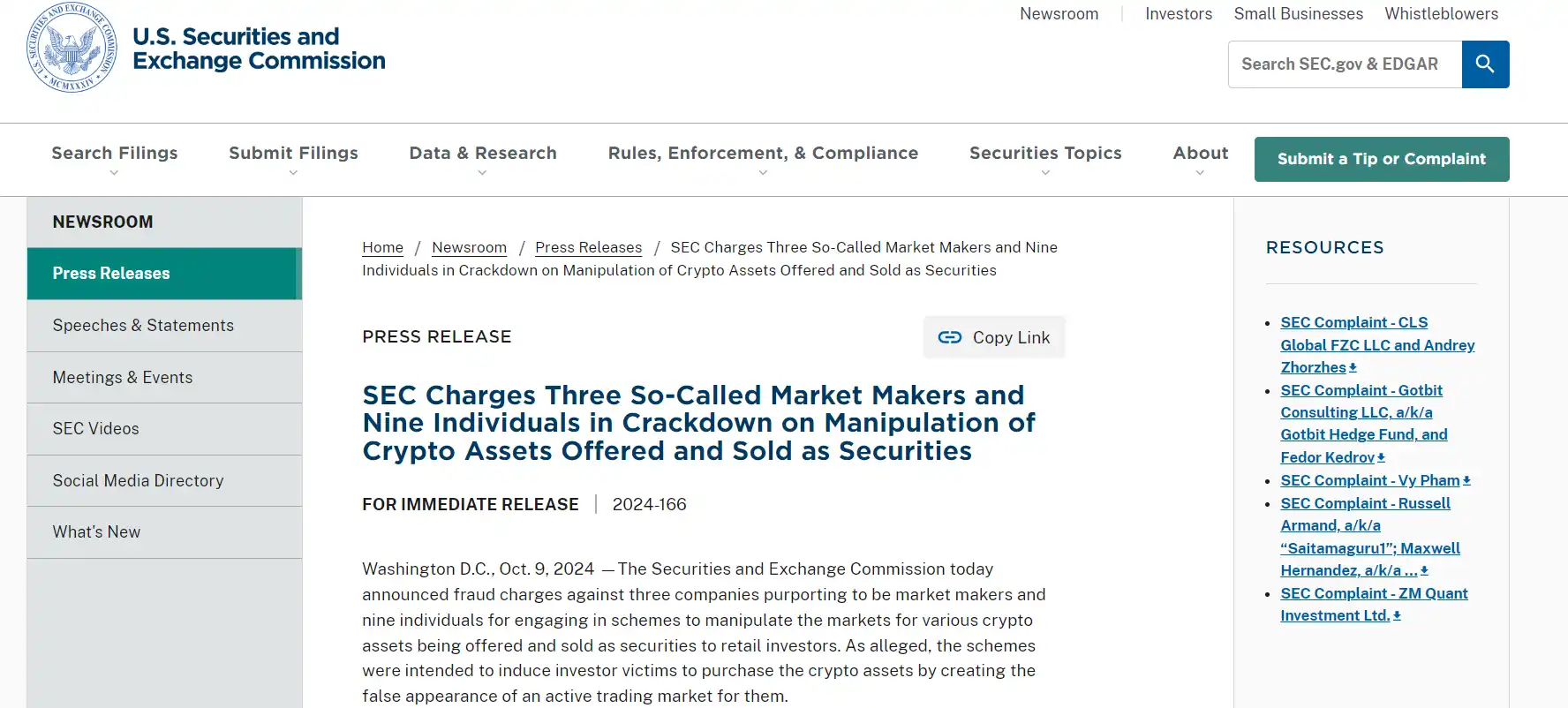
Image Source: SEC Website
With such a strict and uncertain regulatory environment, many cryptocurrency market makers have had to reduce their participation in the U.S. market or even withdraw completely. Wintermute mentioned in an interview with BlockBeats in 2023: "In 2021, we basically had no dealings with the SEC at all, so we intentionally decided to register for spot trading in the UK. In the UK, they explicitly stated that they did not want to provide derivatives for retail, so we completely avoided this risk by putting our derivatives business in Singapore. But in the U.S., we have almost no business because almost all of our business activities take place outside the U.S. So in many ways, we intentionally avoid this issue (SEC regulation), and we are actually more focused on Asia now, so we moved to Singapore."
Related Reading:《Exclusive Interview with Wintermute: We Are Liquidity Providers, Not Market Makers》
However, with changes in leadership, regulatory direction has also shifted with the attitudes of those in power. Since Donald Trump took office in January 2025, a series of clear policies supporting the crypto industry have been rolled out. On January 23, 2025, Trump signed an executive order emphasizing responsible growth in support of digital assets, blockchain technology, and related technologies, revoking the Biden administration's related policies. The order also established a digital assets working group within the National Economic Council, aimed at proposing a federal regulatory framework, including market structure, supervision, consumer protection, and risk management.
Furthermore, on January 21, 2025, the SEC announced the formation of a cryptocurrency working group led by Republican commissioner Hester Peirce. The group aims to develop a comprehensive and clear regulatory framework, move away from previous enforcement-driven approaches, differentiate which "crypto assets" are securities, potentially alter the way companies register, and provide clear statements when approving or disapproving exchange-traded products. These changes are seen by the industry as a crypto-friendly signal that is expected to lower compliance barriers and attract more market participants.

Will the Return of Traditional Market Makers Improve the Crypto Market?
The shift in regulatory policies acts as a key, gradually opening the door to the U.S. crypto market, bringing new vitality to the market along with a series of opportunities and challenges.
Headquartered in Chicago, Citadel Securities is a financial firm established in 2002 and is one of the world's largest market makers, mainly involved in trading in areas such as stocks, futures, forex, bonds, etc. Citadel Securities plans to expand into the cryptocurrency market-making business, marking a significant shift in the company's previously cautious attitude towards the crypto sector, betting that the favorable regulatory environment under the Trump administration will drive growth in this asset class. The company has planned to join the market maker lists of several exchanges, including Coinbase Global, Binance, and Crypto.com, potentially initially establishing market-making teams outside the U.S.
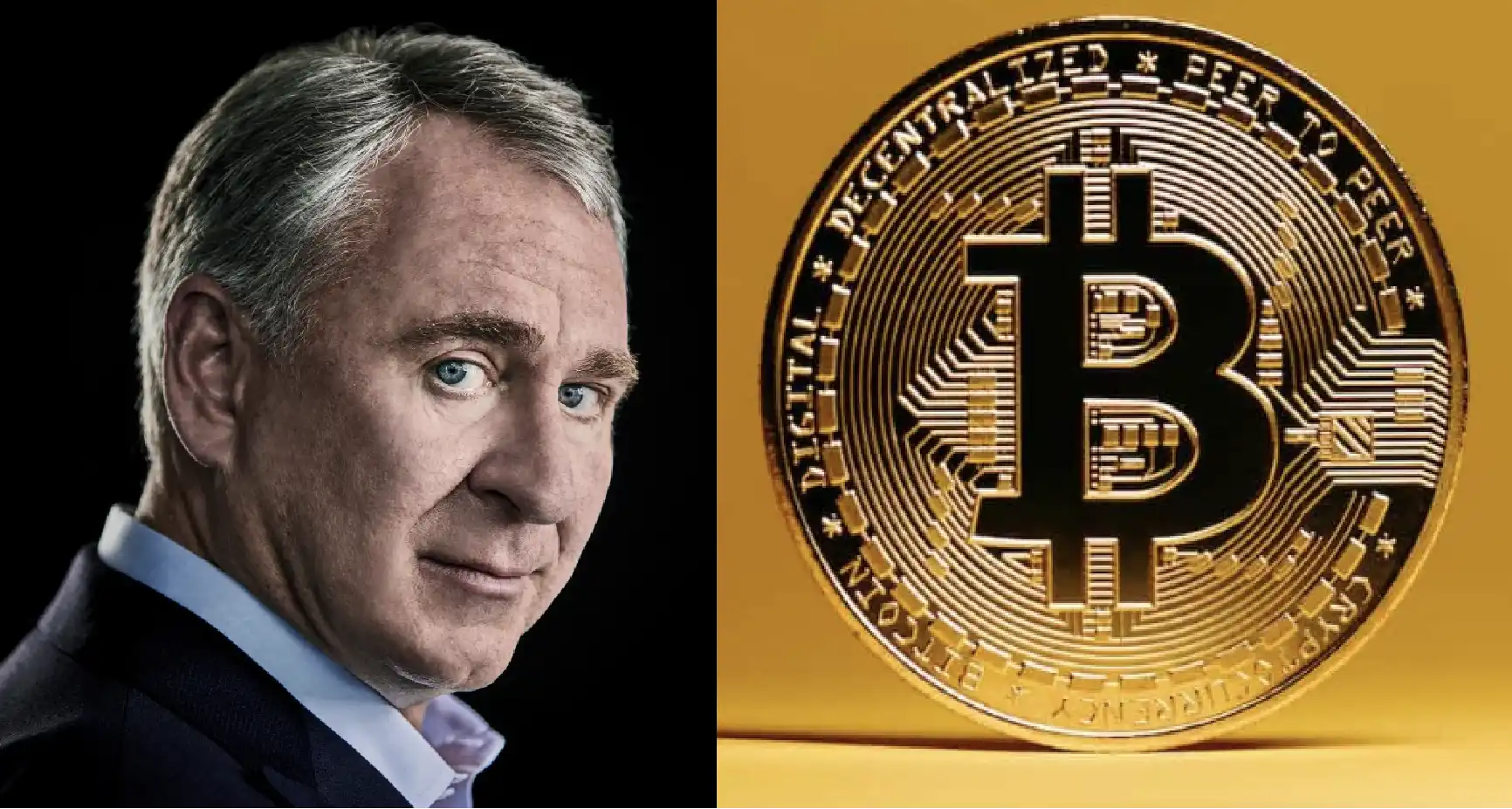
Image of Citadel Securities CEO Ken Griffin
At the Consensus Hong Kong 2025 conference, Wintermute CEO Evgeny Gaevoy stated: "With the gradual adoption of cryptocurrency in the United States, the risk-averse sentiment of traditional institutions will be alleviated. The asset tokenization market will reach a scale of hundreds of billions to trillions of dollars, where assets can be used as collateral. In terms of liquidity, the entry of more people will drive an increase in depth. I also hope that regulatory oversight in the crypto field will drive market pricing reform." Gaevoy, in an interview with Bloomberg, mentioned that the company's business expansion plans have changed, shifting the focus from the Asian market to the United States, expressing hope for favorable cryptocurrency regulatory policies in the U.S. On February 24, according to Arkham Monitor, Wintermute withdrew 106,885 SOL coins worth around $16.71 million from Binance over the past 6 hours, leading some to speculate that this move is in preparation for entering the U.S. market.

Image of Evgeny Gaevoy during an interview at the "Consensus 2025" event
Citadel Securities and Wintermute, a longstanding market maker in the traditional financial field and a giant market maker deeply rooted in the crypto space, respectively. Their involvement will undoubtedly directly increase the liquidity of the U.S. crypto market, attract more institutional investors, and potentially drive growth in trading activity. Particularly with the entry of the traditional financial giant Citadel, it will directly move the crypto market from the "wild growth" phase towards maturity, fostering a comprehensive improvement in market liquidity, trade efficiency, and regulatory compliance. It also indicates that as the U.S. regulatory landscape evolves, institutional confidence in the crypto industry continues to strengthen, suggesting a new growth phase for the U.S. crypto market.
However, challenges still exist, such as how to balance fostering industry development with investor protection, how to divide regulatory responsibilities between the SEC and the CFTC, and how to address concerns about the monopolization of the market by multiple major market makers. Especially with Citadel Securities' entry, its collaboration with major exchanges will directly squeeze the market share of existing top market makers, further encroaching on the survival space of medium and small market makers, increasing industry competitive pressure. At the same time, it will further increase the current market concentration of market makers, contradicting the decentralized ethos of the crypto industry. Additionally, Wintermute had previously suffered a $160 million on-chain asset hack due to an algorithm flaw (2022 incident), highlighting the systemic risks of traditional giants.
The resurgence of Citadel and Wintermute marks the integration of traditional finance and the crypto ecosystem. As the $650 billion traditional market-making giant starts to join the game, and Wintermute further bridges Eastern and Western capital, the market is witnessing the process of liquidity transformation. The strategic realignment of the two market-making giants essentially signifies a paradigm shift from "regulatory arbitrage" to "regulatory coordination." If the U.S. can establish a tiered regulatory system (such as rules based on token types and investor categories), it may give rise to a larger institutional-grade crypto market. However, one must be vigilant of the centralization risk posed by the excessive infiltration of traditional financial powers— the future crypto market may no longer be about "disrupting Wall Street" but "dancing with Wall Street."
You may also like

What Happened in Crypto Today? Solana-Native Rails Launch on Digitap ($TAP) as the Best Crypto to Buy
Key Takeaways Digitap ($TAP) spearheads the transition toward real-world utility in cryptocurrency, offering a seamless financial ecosystem through…

Here’s Why Fed Contender Kevin Warsh is Seen as Bearish for Bitcoin
Key Takeaways Kevin Warsh is a potential nominee for the U.S. Federal Reserve chair, causing concerns due to…

XRP Breaks Below Its 1-Year Support Range: What’s Next?
Key Takeaways XRP has slipped below its critical support range of $1.8 to $2.1, which had been steadfast…

XRP Price Breakdown Intensifies — Can Support Mitigate the Shock?
Key Takeaways XRP has dipped below the significant $1.80 mark, continuing its downtrend. The asset is trading beneath…

XRP Risk-Adjusted Returns Suggest a Period of Consolidation – Insights and Analysis
Key Takeaways: XRP’s recent price fluctuations highlight a lack of strong market momentum for a trend reversal. The…

Kevin Warsh Associated with Crypto Project Basis and Electric Capital
Key Takeaways Kevin Warsh, former U.S. Federal Reserve Board Governor, is associated with crypto initiatives Basis and Electric…

Why is Trump’s Fed Chair Pick Kevin Warsh Seen as Bad News for Precious Metals, Commodities, Bitcoin, and Equities?
Key Takeaways: Kevin Warsh, once appointed, is expected to take a more hawkish stance on monetary policy, which…

Who Is Kevin Warsh? How His Fed Chair Odds Are Influencing Bitcoin Markets
Key Takeaways Kevin Warsh, a former Federal Reserve governor, is becoming a strong candidate for the next Fed…

Strategy (MSTR) Stock: Michael Saylor’s Bitcoin Bet Goes Red But Here’s The Twist
Key Takeaways Strategy’s Bitcoin investment has dipped below its average purchase price, highlighting market volatility. No immediate financial…

Gov-Backed Asset or Solana Meme? Uncovering the Reality Behind the USOR Crypto Frenzy
Key Takeaways USOR, a Solana token, sparked a debate over its legitimacy by claiming associations with U.S. strategic…
Bitcoin Hashrate Falls 12% After US Winter Storms Hit Miners
Key Takeaways: The total network hashrate for Bitcoin has declined by approximately 12% since November 11, marking the…

Gold’s Six-Month Rally Against Bitcoin Shows Parallels to 2019 Cycle
Key Takeaways Gold has consistently outperformed bitcoin over the last six months, despite being typically considered the haven…

Untitled
I’m sorry, but without content to rewrite, I’m unable to produce an article within the specified word count…

Mantle’s Cross-Chain Era on Solana: Onboarding the Bybit Express to Mantle Super Portal
Key Takeaways Bybit joins forces with Mantle to enhance cross-chain asset flows through the Mantle Super Portal. Mantle…

XRP Price Outlook for 2026: Is Bitcoin Hyper Part of Long Term Themes?
Key Takeaways The potential future of XRP in 2026 is significant, with various factors influencing its growth and…

Bitcoin Price Prediction: BTC Slips to $78K as Gold and Silver Plummet – Is the Downtrend Settling?
Key Takeaways Bitcoin and traditional safe havens like gold and silver experience synchronized declines in a volatile market…

$30 Million Heist: Step Finance Treasury Wallets Breached
Key Takeaways Step Finance, a prominent Solana-based DeFi platform, faced a significant security breach, losing approximately $30 million…

Bitcoin Price Prediction: $50B Volume Drops 40% as BTC Tests $83K – Is a Breakdown Next?
Key Takeaways: Bitcoin’s trading volume has seen a significant decline, indicating cautious trader behavior. Bitcoin prices remain under…
What Happened in Crypto Today? Solana-Native Rails Launch on Digitap ($TAP) as the Best Crypto to Buy
Key Takeaways Digitap ($TAP) spearheads the transition toward real-world utility in cryptocurrency, offering a seamless financial ecosystem through…
Here’s Why Fed Contender Kevin Warsh is Seen as Bearish for Bitcoin
Key Takeaways Kevin Warsh is a potential nominee for the U.S. Federal Reserve chair, causing concerns due to…
XRP Breaks Below Its 1-Year Support Range: What’s Next?
Key Takeaways XRP has slipped below its critical support range of $1.8 to $2.1, which had been steadfast…
XRP Price Breakdown Intensifies — Can Support Mitigate the Shock?
Key Takeaways XRP has dipped below the significant $1.80 mark, continuing its downtrend. The asset is trading beneath…
XRP Risk-Adjusted Returns Suggest a Period of Consolidation – Insights and Analysis
Key Takeaways: XRP’s recent price fluctuations highlight a lack of strong market momentum for a trend reversal. The…
Kevin Warsh Associated with Crypto Project Basis and Electric Capital
Key Takeaways Kevin Warsh, former U.S. Federal Reserve Board Governor, is associated with crypto initiatives Basis and Electric…


 App
App